All Your PBS & Tank Needs In One Place!


Inspector Network

We utilize a free program called the Inspector Network to assign jobs to our vendors. We post all jobs we get for our clients and our vendors can view and apply for jobs at their discretion. Our vendors can see the details, requirements, and inspection template that needs to be performed for each job as well as the location and required date or time frame. Vendors will be required to use Link Inspect Pro to perform inspections when working for our company, at no cost to the vendor.

Digital Inspections


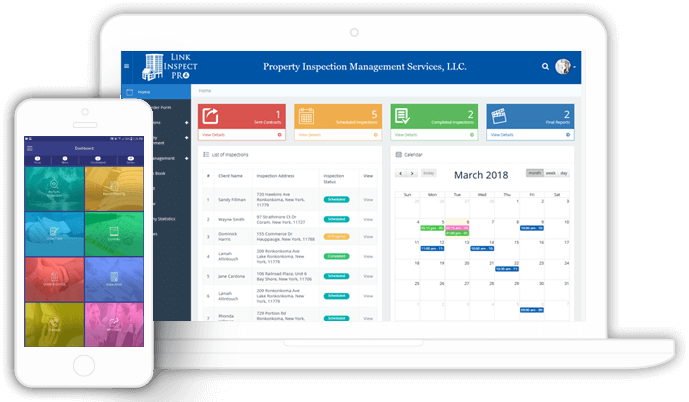
Our vendors utilize Link Inspect Pro to perform all inspections. Link Inspect Pro is a cloud based, comprehensive mobile application to digitally perform any kind of inspection. Customize unlimited inspection templates and perform inspections anywhere, even offline, with all data and pictures syncing safely to the cloud. Create professional reports, track assets, utilize CRM and lead tracking, and simplify the inspection process from a single, easy-to-use app.
State programs must have inspection procedures to determine, independent of information supplied by regulated persons, compliance with program requirements, and must provide for enforcement of failure to comply with the program requirements. States must maintain a program for systematic inspections of facilities subject to UST regulations in a manner designed to determine compliance or non-compliance, to verify accuracy of information submitted by owners or operators of regulated USTs, and to verify adequacy of methods used by owners or operators in developing that information.

When inspections are conducted, samples taken, or other information gathered, these procedures must be conducted in a manner (for example, using proper “chain of custody” procedures) that will produce evidence admissible in an enforcement proceeding, or in court.
When an UST system is temporarily closed for 3 months or more, owners and operators must also comply with the following requirements: (1) Leave vent lines open and functioning; and (2) Cap and secure all other lines, pumps, manways, and ancillary equipment.

When an UST system is temporarily closed for more than 12 months, owners and operators must permanently close the UST system if it does not meet either performance standards.
Steel tanks must be upgraded to meet one of the following requirements in accordance with a code of practice developed by a nationally recognized association or independent testing laboratory: (1) Interior lining (2) Cathodic protection (3) Internal lining combined with cathodic protection.

Metal piping that routinely contains regulated substances and is in contact with the ground must be cathodically protected in accordance with a code of practice developed by a nationally recognized association or independent testing laboratory.

To prevent spilling and overfilling associated with product transfer to the UST system, all existing UST systems must comply with UST system spill and overfill prevention equipment requirements.

Release Detection Methods

Product Inventory Control

Must be conducted monthly to detect a release

Manual Tank Gauging

Tank liquid level measurements are taken at the beginning and ending of a period. A release is suspected if the variation between beginning and ending measurements exceeds the weekly or monthly standards.

Tank Tightness Testing

Must be capable of detecting a 0.1 gallon per hour leak rate from any portion of the tank that routinely contains product.

Vapor Monitoring

Testing or monitoring for vapors within the soil gas of the excavation zone.

Groundwater Monitoring

Testing or monitoring for liquids on the groundwater.

Interstitial Monitoring

Interstitial monitoring between the UST system and a secondary barrier immediately around or beneath it may be used, but only if the system is designed, constructed, and installed to detect a leak from any portion of the tank that routinely contains product

Statistical Inventory Reconciliation

Release detection methods based on the application of statistical principles to inventory data.